Supervisors review fire safety, inspection and size limits for farm structures
Woodland, Calif. (Woodland Times) — Yolo County authorities are contemplating modifications of an almost sixty-year old ordinance that grants exemptions for a selection of agricultural buildings from a building permit process, as Yolo County employees and local fire services are analyzing whether it is necessary to add more protections concerning fire safety, construction and supervision.
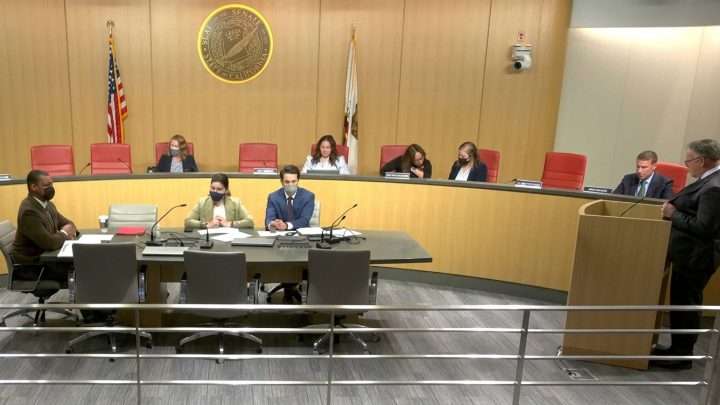
Yolo County Board of Supervisors got an informational report regarding Yolo County’s agricultural building exemptions program and potential amendments of the ordinance during its July 21 meeting.
Amendments could include restrictions in size or number of exempt buildings, restrictions in permitted uses, fire and life safety measures, recorded restrictive covenants and inspections under conditions where it is possible to make them according to state laws.
According to Yolo County staff, creation of recommendations would take about six months. More public outreach is expected before bringing amendments of the ordinance to the Board of Supervisors.
Exemptions started in 1969
Yolo County authorities allow constructing exempt agricultural buildings since 1969, when supervisors passed Ordinance 611.
This policy was modified and approved repeatedly throughout decades as a part of the efforts of Yolo County to fit into the needs of agriculture.
Exemption does not mean that agricultural buildings are exempt from requirements of California.
Yolo County authorities highlighted that agricultural buildings should meet requirements of the California Building Code and other state and local laws.
The exemption only means that the building permit process, plan checks and construction inspections are excluded.
According to the laws, construction, enlarging and alterations of buildings in general require permits, with several exceptions provided by building codes and local laws.
Which buildings are exempt
According to Yolo County’s current ordinance, exempt agricultural buildings should be used exclusively for farming purposes.
Allowed uses are housing farm equipment, hay, grain, livestock, poultry and other agricultural produce.
They cannot be used for residential, agricultural processing, packaging or treatment operations and public occupation.
Exempt agricultural buildings should also be located in agricultural zoning districts and meet zoning requirements and other requirements according to the state and local laws.
Building standards should be satisfied even in cases when the permit is exempted.
Exempt structures should satisfy either conventional light-frame building requirements or design of California-licensed engineer or architect.
Utilities are restricted
The county’s ordinance also restricts utilities that can be installed in exempt agricultural buildings.
Separate permits are needed for plumbing and electricity installation; meanwhile, mechanical permits are prohibited.
Electricity service is usually limited to lighting and ventilation, water service is limited to the needs of livestock and other agricultural purposes.
Application process requires satisfaction of fire protection requirements, flood requirements if they exist, environmental and sanitary standards and setback requirements from neighboring non-agricultural property.
Application process still requires county approval
Property owners cannot just start construction and declare that their buildings are exempted.
They should submit a written application, a site plan and agreement on conditions of exemption which should be legally binding.
Applications are reviewed by several departments and divisions of Yolo County: Building, Planning, Environmental Health, Integrated Waste Management and Public Works.
The appropriate local fire protection district also takes part in the review process.
However, Building Division usually only reviews the application and the site plan because of exemption from the conventional process, county building inspectors do not perform routine construction inspections of those buildings after the approval.
After approval of an application, the owner gets the document, giving permission for construction without conventional inspections of county building officials.
County staff pointed out the lack of inspections as one of the main problems of the program. Because of the fact that the buildings should satisfy the requirements of California building standards, it could be difficult to discover construction violations, if the building is not inspected.
Exemptions decrease construction costs
The agricultural exemption could also save considerable amount of administrative costs for the applicants.
County staff estimated that getting of agricultural exemption could cost between $1,500 and $2,000.
Conventional building permit usually costs approximately $2,800 to $8,500, depending on the size and complexity of the project.
Records of Yolo County showed that approximately 700 to 750 agricultural building exemptions were granted since the time when electronic record-keeping started in the late 1980s.
Because of the lack of inspections of the built structures, Yolo County officials do not have exact information about how many granted projects were actually constructed.
Use of the program was rather moderate in recent years. Yolo County received approximately 13 to 17 agricultural exemption applications per year in last three years.
Fire services raise safety issues
Yolo County officials discussed the program with local fire protection agencies in 2026.
Community Services staff met representatives of most Yolo County fire protection districts in February and presented this issue to Yolo County Fire Chiefs Association in March.
Further meetings with municipal fire departments and county fire districts took place in May.
These meetings resulted in some possible changes that could improve firefighter access and public safety.
Possible options for revision include limiting the size of exempt structures, limiting number of exempt buildings at each property and limiting categories of agricultural buildings that can receive an exemption.
Also, there are possible options that involve stronger requirements for access of fire apparatus and other improvements in accessibility for emergency services.
Recorded restrictive covenants could be required so new property owners would be formally informed about the fact that the building was constructed as an agricultural exemption and is subject to limitations in its use.
There are other options for modification including expanded application requirements and limited inspections when it is possible to do so according to state laws.
Fire officials taking part in discussions of Yolo County usually supported the idea of revising the ordinance according to the staff report, submitted to supervisors.
Agricultural exemptions are widespread in California
Yolo County is not the only county allowing exempting agricultural buildings from the conventional permit process.
Agricultural building exemptions are used in numerous California counties, although the rules differ considerably between jurisdictions.
Counties using agricultural exemptions include Sacramento, Lake, Sonoma, Placer, Tehama, Nevada, Shasta, San Luis Obispo, Alameda and Riverside counties.
Some jurisdictions have limitation in size or parcel acreage of exempt buildings. Some impose fire-safety requirements, property restrictions or use limitations for exempt structures.
It could give Yolo County officials several examples to choose from while reviewing possible revisions.
Possible amendments could change decades-old policy
Future amendments could be a considerable revision of the policy existing for more than fifty years in Yolo County.
Yolo County officials should consider lower costs and decreased permit requirements appreciated by agricultural operators together with construction standards, firefighter access and Yolo County’s ability to control compliance.
No changes of the ordinance were approved.
If Community Services staff continues to develop possible amendments, the next steps for Yolo County will include further discussion with agricultural operators, fire agencies and public, after which recommendations will be made to the Board of Supervisors.